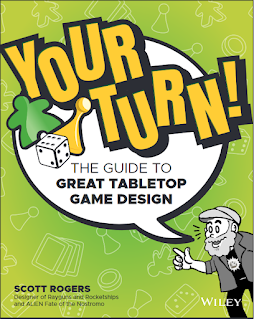
I just received my author copies of YOUR TURN! The guide to great tabletop game design and it turned out great!


You can preorder your copies here:

I just received my author copies of YOUR TURN! The guide to great tabletop game design and it turned out great!
You can preorder your copies here:
Hey all,
I'm going to be on the History Channel show "The Toys that Build America" on October 22nd and October 29 talking about the histories of Bingo, Yahtzee, Nintendo and Gunpei Yokei!
Don't miss it!


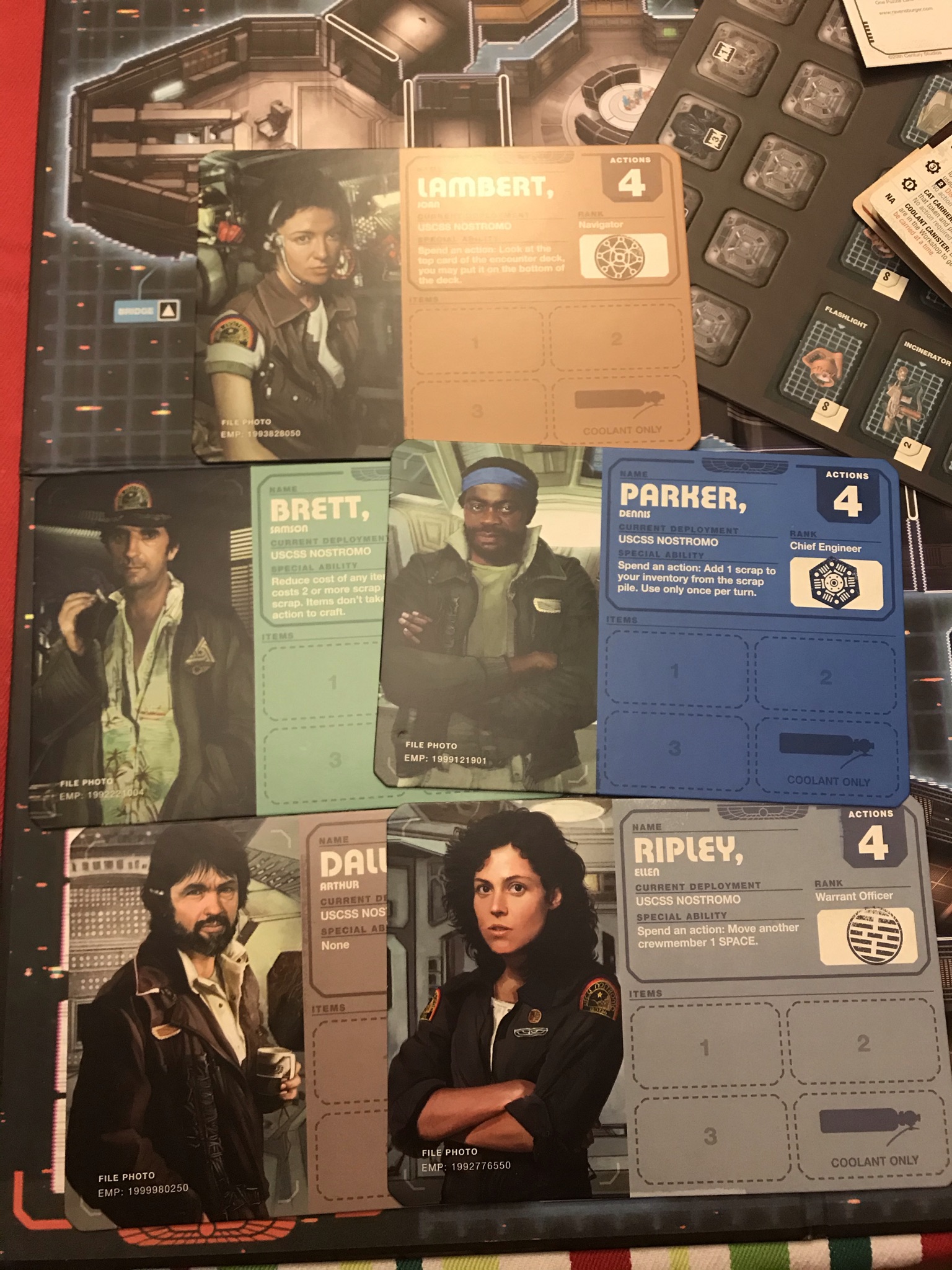
In spring of 2020, I was contacted by Ravensburger about their available licenses. I'm fortunate to be on a list of game creators that are offered the opportunity to pitch game ideas to the publisher. ALIEN was on the list and as I'm a big fan of the sci-fi thriller, I knew I had to give it my best shot!


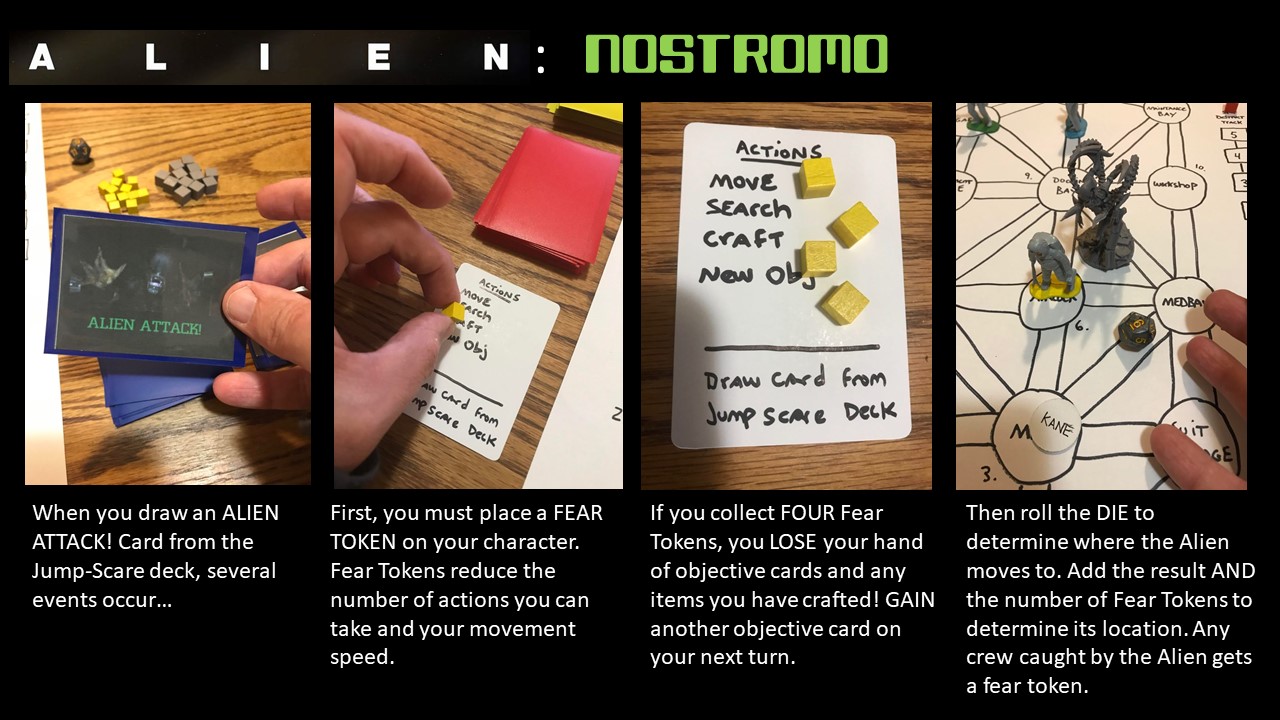


Another funny moment during development: I'm friends with sculptor Brian Dugas and we were DMing each other about what projects we were working on - without telling each other what projects we were working on. I deduced that he was working on the minis for ALIEN and said "Hey! I'm designing that game!" We both had a good laugh and I'm glad that Brian was on the project - he's super-talented and it's always great to work with friends.


ALIEN: Fate of the Nostromo came out in the summer of 2021 and I couldn't be more proud to have designed the game!

This week, Disney released this teaser poster from the upcoming Haunted Mansion movie.

Recently, I was fortunate enough to be invited to a pre-screening of the movie and without violating my NDA, let's just say that Mansion fans will be pleased. After watching the film, it reminded me of a board game that I had designed based on the classic theme park attraction.
Back in 2018, I was invited by a publisher to pitch ideas based on licenses they had access to. One of them was Disney. Because I am a big Disney theme park fan and a bigger Haunted Mansion fan, I asked them "since they had the Disney license, did this mean that they had the rights to make games based on the theme park attractions?" They admitted that they hadn't thought about it and asked. When they came back finally came back with a "yes", I went to work on several pitches based on theme park attractions including the Haunted Mansion.
This is the pitch deck I sent them:


As you can see from the pitch, I wanted to make a game that could be slightly scary, slightly fun just like the attraction. As you can tell, I took my inspiration (and more than a few components) from another of my favorite games: Betrayal at House on the Hill.

I had always noticed that when gamers complained about BaHotH, they often mentioned how they love the exploration half of the game they disliked the traitor half of the game.


Taking that complaint in mind, my design emphasized the exploration but rather than making one player become the bad guy, the villain would be the ghostly bride who - with the use of cards - chased you around the house. If she caught you, you would get a "death certificate" - you couldn't win if you had one. You had to visit Madame Leota in her seance chamber to remove it.

Fun Note: I originally made The Hatbox Ghost the villain of the game, but I figured that not enough people knew who he was. That will change when the new movie comes out. ;)

You also couldn't leave the Mansion if you had ghosts following you - inspired by the quote "Beware of Hitchhiking Ghosts, they may try to follow you home" - so you need to appease them by finding items in the house that they want.

The publisher was excited about my pitch and asked for a prototype to evaluate. I leapt at the opportunity although I always clarify to the publisher that this is just a "crude model" rather than the art and design of the final game. I even designed a box!

Both the publisher (and by their reports, the licensor) was excited about my pitch and the prototype... but in 2020 I was informed that the Haunted Mansion license went to another publisher who made a very different style of game.
Needless to say, I was disappointed that this didn't happen as I love the Haunted Mansion and would still love to have a game based on it published. Maybe I'll take my own advice and "Make my own damn Haunted Mansion" game someday.

I've been writing a new book about tabletop game design called YOUR TURN! The guide to great tabletop game design which is being published by my friends at Wiley & Sons!
It's like my other books - LEVEL UP! The guide to great video game design and SWIPE THIS! The guide to touchscreen game design - but this one is about analog/board games!
Not only do I share all of my experiences, tips and tricks about professionally designing tabletop games but you'll also learn the history of these genres, the mechanisms that you can use for your own games and how to pitch your game to publishers... or publish it yourself using crowdfunding!

I can't wait for you to read YOUR TURN! and take your turn designing tabletop games! You can pre-order YOUR TURN! either at Amazon.com or at the Wiley.com website or look for it this summer at your favorite book seller!
I receieved this message from my friends at Trick or Treat Studios!

We are excited to announce the Officially Licensed The Texas Chainsaw Massacre Game! A new tabletop game of horror from designer Scott Rogers, illustrated by Terry Wolfinger.
.PNG)

If you've never seen it before, it's available for FREE on Kanopy and Tubi.
kanopy.com/en/product/110
tubitv.com/movies/685771/

Recently, someone asked me "what needs to be in a board game contract"?
Negotiating a contract as a board game designer/inventor can be a tricky thing, especially if you've had no formal training in business - like me. But I have had to negotiate my own contracts in the past and have created a list of topics that you want to make sure are in your own contract:
1) Your advance. How much is it? How far from contract signing will you get paid? Does it come out of royalty? Do you still keep it if game doesn't get made?
2: Your Royalty Rate. How much is it (2-10% is average)? How often do you get paid? Is there a minimum that the game must sell to get issued a royalty check or does it roll over to next period? Does the rate increase if more than a set # of games are sold?
3) You advance/royalty on reprint copies or international translated copies. Do you get an advance or royalty for each language the game is translated into? If there is a second edition (or more) does your royalty rate go up?
4) 1st right of refusal for expansions, second editions, etc. Do you get "first crack" at any new material based on the core game? Do you get an advance/royalty on those derivative products? Do you get your name on the box/in the credits as the originator of the base game?
5) Kickstarter/electronic sales royalty. Often the prod. run printed for Kickstarter is different than those for traditional distribution. What % of the KS do you get (it should be higher than your normal royalty). The same is true for any games sold via Amazon, etc.
6) What is the payment schedule? How often do you get paid? What happens if there is a missed payment? What is the minimum that the publisher will pay? Is it paid electronically or via check?
7) Comps. How many copies of the game do you receive? I usually ask for a case or 6 copies. These are great for self-promotion, friends and family gifts, as well as a copy for your own library.
8) Credits. How are you credited? (be firm on which title you get - this is the #1 way pubs may "screw" you) Where are you credited? If possible, always on the box - front is preferable. But also demand to be listed in the manual and on the BGG website.
9) Rights reversion. If you are licensing your game (which is better than selling it) when do they revert back to you? What reverts back to you: design only or the art and other assets created for the game? Do you own the title too?
10) Additional copies of game. Do you have the option to buy more copies of your game from the publisher? Is it at wholesale price? lower than wholesale? Can you buy remaining stock if game stops being sold?
I suggest negotiating things like video game rights, toy rights, clothing rights, etc. into a different contract as they are moderately to severely different things from your board game. Your rights in your contract should focus on the board game and any "ancillary" products (like game mats, KS stretch goals, etc.)
Keep in mind that I'm not a lawyer. These are just the information and knowledge that I've picked up over negotiating contracts on my own and making mistakes, but I'm getting better at it.
I wish you the best of luck!




 Posts
All Comments
Posts
All Comments