A co-worker of mine just had his first child - which reminded me of the time when my own first child was born.
For those of you who haven't been there, even though we do almost none of the work, being a expecting father can be pretty stressful. besides all of the worrying about whether you are going to be a good dad (or at least better than your own dad), you worry about whether your wife is going to get through the pregnancy alright, that the baby is going to be healthy, that the doctor doesn't screw anything up like dropping the kid on the floor or cutting the wrong thing during the circumcision.
Once the pregnancy was over (which happened around six in the morning) and all the tests were done and Mom and baby were all cleaned up and all the family and friends had come and gone and everyone had finally settled down for the night (this was around 9 pm), I finally felt like I could relax.
A gigantic weight of nine months of worry lifted off of my shoulders and for about five minutes, I experienced the greatest peace in my life. Pure, unadulterated relief.
And then I looked over at my new daughter and I realized I was going to have to worry about this little person for the rest of my life. And then the weight came slamming back down twice as hard as before. But that's OK, that's what being a father's all about too.
So my advice to my co-worker and everyone else out there is to savor those fleeting moments of peace and happiness. They don't come that often, but when they do, they sure are great.
One of the first handheld games I ever owned was the Nintendo Donkey Kong Game N' Watch a friend of mine brought back for me from Japan. I loved that thing and sadly had to sell it while in college for some rent money. SIGH.
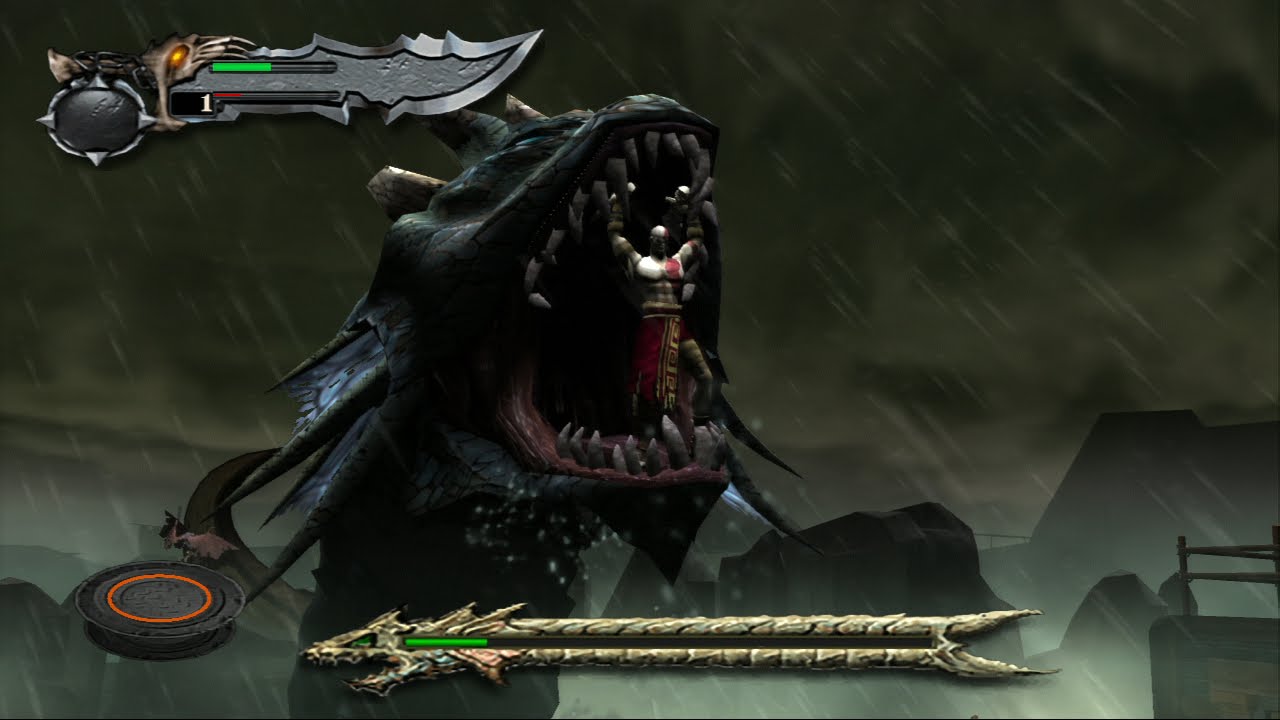
Years later, I designed the hydra boss fight for the original God of War - It's a pretty well-loved level and pretty damn hard, but had some great visuals (Par for the course with the talented GoW team)
How do these two topics go together? Behold!
The mad geniuses at Swing Swing Submarine created Greek and Wicked - a mash-up of Old Skool tech and New School cool... and it is glorious!!
By the way, have you ever wondered what inspired the "Kratos in the jaws of the Hydra" sequence? Well, wonder no more.
While Level Up! The Guide To Great Video Game Design isn't due out until July, I wanted to share a sneak preview of the book with you:
YOU CAN DESIGN A GAME, BUT CAN YOU DO THE PAPERWORK?
A Japanese game director once visited the studio where I worked to impart his wisdom to our team about his philosophy of game design, which mainly had to do with how much money his latest game had made. As he was leaving, he asked our team a cryptic question: “I believe making games is like fishing” he said. “When I return, you will tell me why this is so.” If he had been wearing a cape, I’m sure he would have swooshed it mysteriously as he left.
I spent a lot of time thinking about just exactly how making games was like fishing. In the end, I decided that making games is nothing like fishing. Fishing is quiet and slow and involves waiting for something to happen that may never happen. I also decided that this game director was full of crap. So I developed my own analogy.
Making games is like making chili (bear with me — it’ll make sense). Like making chili, you first need a recipe and that recipe is the game’s documentation. Having the right recipe is important. You are not making soup or stew. You want to make sure your documentation not only has what is in it, but how it can be made: just like a recipe. Be sure to follow the recipe, but be mindful that it will have to change, especially if something doesn’t go right. And, just like making chili, remember that you can season to taste. Some parts of the game will be “meatier” than others and you will want to adjust your game to make those parts more pronounced.
Next step is to assemble the ingredients. Just as a chili needs ingredients, a game’s design needs people and tools to make the game. You’ll also need the right equipment to make your game, just like you’ll need spoons and pots and pans and a stove to make your chili. However, you might not have exactly what you need on hand. Sometimes you will have the team and resources you want, sometimes you have to improvise with what is available. That’s OK; I hear cowboys made some pretty good chili with nothing more than a campfire and a tin can.
Add these ingredients together. The beauty of chili is that it usually works no matter how you prepare the ingredients. You can carefully cut and chop everything or just throw it together in a big pot. Some game productions are very methodical and well organized. Others are a mad dash to get all of the elements into the game as soon as possible. Just make sure you follow the recipe so you don’t forget anything. Prepare the ingredients in the right order. Always brown the meat before you add it to the pot. (I learned that one that hard way.)
In chili, everything is brought to a boil and then left to simmer. Crunch Time reminds me of boiling: a frantic burst of energy and effort to get everything in and running. However, if you boil for too long, you can ruin the chili, burn the pot and catch the stove on fire. Games and studios have been destroyed by too much crunch time, so be responsible. Game polishing and bug squashing reminds me of chili simmering. Chili isn’t ready the moment you finish assembling it. You need to take the time to make it just right. Games, just like Chili, need time to be iterated on, improved and seasoned. Bugs, code, art and design problems with the game, need to be found and fixed. That takes time. Allow for that time - just like you need to allow for cooking time for chili. Sometimes it’s good to let the team play with a part of the game to find out what works and what doesn’t. I find that chili always tastes better the day after you have made it.
Your chili may need something added to it at the last minute to make it work. Unless you’ve royally screwed it up, chili can usually be salvaged. I’ve seen troubled games get turned around in the eleventh hour. However, I don’t recommend making games this way. It can lead to stomach upset. Chili can also deceive. It may look horrible, but still taste delicious. Some games may not be perfect or even pretty, but if they have good gameplay they can still entertain. Good games and good chili satisfy soul as well as the stomach. (Or the head - if you think with your stomach.)
You see? Making games is exactly like making chili.
We often talk about how to be creative, but we rarely talk about what can kill it.
Youngme Moon posted a video outlining his 14 points on how to kill creatativity. I'm sure we're all guilty of doing at least one his points. For those of you who'd rather get the straight info, here's a transcript of his video:
1. Play it safe 2. Listen to that inner voice – what if someone thinks it stupid 3. Know your limitations – pigeonhole yourself 4. Remind yourself it’s just a job. 5. Show you’re the smartest guy in the room – make skepticism your middle name 6. Be the tough guy – demand to see the data/there’s no evidence this will work 7. Respect history – give the past the benefit of the doubt 8. Stop the madness before it can get started – crush problem ideas early 9. Been there, done that 10. Keep your eyes and mind closed. 11. Assume there is no problem. 12. Underestimate your customers. That’s not what they’re asking for. 13. Be a mentor and give advice to others. 14. Be suspicious of the “creatives” in your organization 15. When all else fails, act like a grown-up - get back to work.
I appreciate when someone does a great April Fool's prank (like today's Google changing their name to Topeka) and love reading about them, but I felt like I've never come up with something epic... or even good... for an April Fool's joke. Usually they just come off as cruel.
Conversely, my 8 year old daughter is fascinated by the concept. In the first hour after I woke up, she tried to "April Fool" me three times. Once by telling me that the stove was broken. (To which I replied "What are you doing using the stove?"), the second time that she didn't love me (there's that cruel streak) and third that there was a big spider in the bathroom. That last one was pretty good because she had drawn a picture of a spider and set it on the toilet. Maybe she can teach me a thing or two.
This brings me to thinking about April Fool's jokes in gaming. We've had Christmas Games...
...Halloween Games...
...even Groundhog's day is represented...
...but April Fool's day is woefully under-represented.
I guess the closest thing to an April Fools prank shows up in Metal Gear Solid'sPsycho Mantis Boss fight where the character reads your memory card and spouts off all of the titles you've played. Then he uses his psychic powers to "move" your game controller (actually activating the controller's actuator.)
But MGS is an amateur compared to the pranking in Eternal Darkness. As the game's heroes lose their sanity, the game tries to convince you that your character's head has popped off, the video has gone black, the volume has turned off, the game has crashed or deleted your save files. Fantastic, especially if you don't know it's coming. It's especially impressive because this type of pranking requires dedication and planning throughout the entire game design. Which must be why you just don't see it that often in games.
Here are a few things I've realized about putting pranks in games:
1) The player can't see it coming. The fun of pranking comes from the surprise/shock of the prank. It's like a scare but going for the laugh rather than the scare. Although often the two go hand-in-hand. (as Eternal Darkness went for)
2) The prank has to make sense within the context of the game. The MGS and ED pranks made sense because they were tied to the game's hardware. If you go too "out-there" it's just going to feel completely random and confuse the player.
3) Gamers are really good about keeping secrets. Player's did a great job not spoiling the ending to Bio-Shock or Portal or Drawn to Life: The Next Chapter. They want others to get pranked/surprised just like they did.
Eternal Darkness came out in 2002. I think it's time for another good "prank the player" game. I wonder who will step up to the plate?
As for my own April Fool's prank, I guess I'll have to come up with something good for next year. Happy April Fool's Day!
Nintendo has just announced that the next version of the DS will feature glass-less 3D graphics. As several people around the web are guessing just how they are going to pull this off, I found this video showcasing an I-phone app called "Word Fu"
Sadly, the game play isn't getting very good reviews but the technology is pretty cool. It's worth taking a look just for the tech.
However, all of this talk about 3D in games and movies has got me thinking about whether it is really "the next big thing" - which leads me to the logical thought about 3D movies. I think I saw EVERY theatrically released non-porn 3D movie that came out in the 80's. (There's a really good list that includes everything including theme park rides and IMAX movies here)
This includes:
"> The wretched Spacehunter: Adventures in the Forbidden Zone
The awful MetalStorm: The destruction of Jared Syn
"> And the truly terrible Treasure of the Four Crowns.
There's something magical about an object coming right out in front of your face. I still remember being mesmerized by the floating potato/asteroid from the beginning of Captain Eo. (Why take it from me? Grab your red/cyan 3D glasses and watch it for yourself! By the way, They're showing Captain Eo again for a short time at Disneyland. I've got to go check it out!)
But 3D was just a gimmick used (twice!) by desperate movie theater owners to lure audiences away from their TVs. The battle is as the internet, gaming and TV draw modern audiences away from the movie theater. How long will the 3D phenomena last? Until audiences get tired of paying extra for it, I'd guess.
So what does this mean for gaming? I was reading a thread about 3D technology and a game developer quipped that "all games are 2D anyway" - which is a good point. 3D doesn't matter unless we are using it for more than visuals. Right now, 3D just means that you can see depth or maybe the sides of objects. (If that's all you need, then check out the cool Nvidia glasses that can convert any game to 3D with little to no work from the developer.)
I hear you say "It will help the player become more immersed in the game!" I retort with games are already immersive enough. People are starving themselves to death while playing video games! How much more immersive do you need it to be? While I don't think 3D is anything more than an enhancement to a game, I know (OK, I hope) that the industry is smart enough to treat it more than "Dr. Tongue's 3D House of Wax."
What will it mean to truly make 3D games? Here's some thoughts:
1) Games play is based on depth perception. This is tricky because video games have got really good at eliminating the need for depth perception. Think about a video soccer game. In soccer, depth perception matters alot. You use it to estimate how close the ball or an opponent is from you, how far you are from the goal so you can gauge the strength of a kick, how far down the field you are going to have to run and for how long before you get to where you want to go. Games have successfully boiled soccer down to this:
Granted, there is a lot missing from this version of soccer, but the basic gameplay and feel is still there - moving up and down the field, passing, getting into position to score, trying to block/intercept an incoming shot.
So how is a full 3D version of soccer going to play any better? Not with the addition of a 3D camera. The above version shows me more than my human eyes could ever show. I can see the position of the ball, all of the players and their relationship on the field at a glance. Other than getting outside and some exercise, the video game soccer game is a superior version to reality.
So really, what I'm getting at is, developers will have to answer the question "What games will be best for 3D?" Not everything will be best for 3D although I'm sure we'll see every a 3D game in every genre at the next two or three E3s.
I think a good game to showcase depth in 3D is something like Operation.
Operation requires having to move the tweezers past the electric buzzer layer. That layer matters because to touch it means failure. Depth becomes part of the challenge, not just something to make things look prettier.
2) Games will have to utilize the concepts of "behind", "above", "below" and "around". But games already do this functionality pretty well. Many games allow the player to examine a 3D object in the game world or inventory by moving and rotating it around in space and video gamers have been used to moving around in 3D space since Castle Wolfenstein. But what about the manipulation of objects? I'm not talking about Hidden object games (which I predict we'll be seeing many games use the "lift up and examine" mechanic until we're sick of it.) I think the real advancement will be in the building and creating space. Think of it, you can have a complete collection of 1000's of virtual Legos to build and create with without having them scattered all over your house and stepping on them with bare feet in the middle of the night.
Sadly, we're going to see alot of 3D Hidden object games as a by-product. While I have nothing against these "games", I don't think of them as games. They're more like puzzles - things to do when you can't go outside to play. Expect to see the "lift up and examine" mechanic to be over-used until we're sick of it. And another thing, ultimately, how much reality do we really need in our games? ">Sony Move demo video. Sure making a map appear out of thin air and lying it down on a virtual table is cool, but the more I think about that video, the more I wonder do we want to replicate reality?
3)Complimenting the simplification of reality - because of technological limitations, video games are excellent (not just really good, but excellent) at reducing real world actions into simple controls. I don't know about these motion controllers. I've made several Wii games and the more the development teams worked on them, the less motion controls they built into their games. Video game controls are a brilliant design in efficiency. They allow you to do very complex moves with a minimum of effort. Look at God of War for example. While the player can pull off some pretty complex combat moves, severely complex moves like killing a boss and mundane activities like opening doors and chests have been reduced down to a simple button press at the right time. Compare that to Heavy Rain which takes simple activities like opening a refrigerator door, walking up a hill or starting a car and makes them complex player actions with multiple stick moves and button presses. Players are over the Wii motion controls already. Is Move or Natal going to re-excite or will they react to it the same way people react to the Wii? A part of me believes that players want their games to be real-looking but not real-playing.
Ultimately, I'm sure 3D will bring some cool things with it and push visuals and game play towards reality, but the trick will be to remember that it's still just a game. To paraphrase George Lucas "A special effect is a tool, a means of making a game. A special effect without gameplay is a pretty boring thing."
The game developer's conference is going on RIGHT AT THIS MOMENT in San Francisco and I'm not there.
And I hate that I'm not there.
When I first started in games, I asked my employers to send me to the show (as many other companies do) and I was told by my bosses that "GDC is just a place for people who are out of work to go to distribute their resumes." I believed this nonsense for many years. Then one year, Capcom Studio 8 head Dave Siller recommended that I attend. He was very positive about the conference and knew it would be good for me.
(Thanks Dave)
And he was right.
While GDC is a really good place to distribute your resume (and check out the latest tech and see some really great student and independent games), the GDC at it's best is a way to hear some of the most important thinkers and creators in the industry talk about how they work, how they think, their mistakes and their successes. It's very inspirational and informative. Even the bad lectures (though you shouldn't feel compelled to stay through the whole talk if it's not helping you - there are too many other ones going on at the same time) can be educational as they provide great food for thought and conversation.
The conversations. That's actually the part I miss the most about GDC.
I have been in some great roundtable discussions that have been helpful to me in my career - being the same room with game developers I would normally never get a chance to talk to, discussing game development.
Even when sitting at one of the big round table in the main hall while waiting for a talk to start, I have been known to strike up random conversations with interesting people. One conversation literally lasted two days as the person and I talked through the night about making games.
(That slide needs more pictures)
So, if GDC is so great, why aren't I there right now? I intended to go. I even intended to speak at the show. I wrote and submitted a talk proposal that passed the first round of judging (it was called "Why I Hate Fun" and supposedly, it made one of the judges laugh so hard that he shot Mountain Dew out of his nose) but it didn't pass the second round and to be honest, I knew it wouldn't. It was too thin on content and I knew it. I was literally thinking about asking the panel to remove my submission when they let me know the had passed. Not a surprise and frankly, a bit of a relief. (Which brings up the question - Why was it so thin, Rogers? Because I was literally spending every waking hour I wasn't working or spending with my kids working on my game design book.)
Actually, I'm fine with it not being accepted. It re-taught me a valuable lesson about being professional and being thorough with my work. When I didn't get into the show for a talk, I asked my work if they could send me and they just didn't have the budget for it. I should have booked a flight and a hotel room (or crashed with a friend) because I had a chance to get discounted tickets, but even that was too expensive and I threw out my back... blah blah blah. Now I just sound like I'm making excuses. Anyway, I miss not being at GDC. You just don't feel like you are taking part in the industry if you aren't there. And you bet your ass I'm going to be there next year.
Scott Rogers has been designing video games for over 20 years and is the author of Level Up! The Guide To Great Video Game Design and Swipe This! The Guide to Great Touchscreen Game Design. You may have played some of the games he designed including God of War, the Maximo series, Pac-man World, Drawn to Life series and Darksiders. He likes e-mail. Why not send him some at mightybedbug@gmail.com









 Posts
Posts


